DRM debate debunked: Let's count the lies
The Wall Street Journal had an online debate between Brooklyn Law Professor Wendy Seltzer and Hollywood cartel shill Fritz Attaway. The debate centers on DRM and the impact it has had on innovation. Selzter does a great job debunking a lot of the lies that Attaway spins, but let's take another look at what he says: (Unless noted, quotes are attributed to Fritz Attaway)
Digital rights management is the key to consumer choice. The better the DRM, the more choices consumers will have in what they view, when they view it and how much they pay for it. The only valid criticism of DRM is that some of the DRM technology currently in use is not sophisticated enough. But it is getting better. Users of next-generation DVD technology will have more choices than they do today because the DRM technology will be more sophisticated.
Wow, where to start? Attaway's claim that consumers will have more choice is pretty outrageous. As it stands DRM gives the Hollywood cartels more control over what people view, limits the number of places and times they watch it, and ensures that people pay each time they view a movie. His belief of Next-Gen DVD players is so divorced from reality that it's scary. Both Blu-Ray and HD-DVD have DRM built in called 'Image Restraint Token'. It should be called the 'Early Adopter Tax'. If you own a HDTV without the HDCP copy protection scheme, at any time the Hollywood cartels can downgrade the resolution of your video to just slightly better than DVD. By 'more choices' Attaway means 'no choices'.
Why is DRM the key to consumer choice? Because it allows content owners to tailor their offerings to what consumers want.
No consumer wants the Hollywood cartels to be their technology tailor. That's why every single online video distribution system has been a complete failure. Consumers have rejected every Hollywood cartel attempt to sell cripleware to the public.
Many consumers want to own a permanent copy of movies. Others are only interested in having an opportunity to watch a movie once. DRM technology allows studios to offer copies of movies that consumers want to own, and a viewing only opportunity, usually at a much lower cost, to those who don't want a permanent copy. It is a win/win proposition for both the owner of the movie and the consumer.
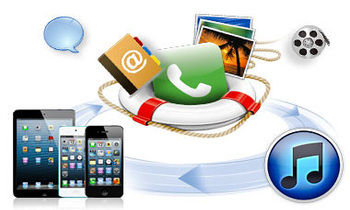
It's a lose/lose proposition. What Attaway doesn't mention is that none of those magic DRM movies will be transferable between devices. The Hollywood cartels want you to buy the same movie upwards of 4 times: Once on DVD, once on UMD (PSP), once on iTunes for the iPod, and all over again on Next-Gen DVD.
I have been hearing that the DMCA will stifle technology innovation since the day it was enacted in 1998. But there is absolutely no evidence to support that assertion. In fact, the record supports the very opposite conclusion -- the DMCA has been an incredible stimulus to both technology and marketing innovation. Just look at some of the new viewing opportunities that have become available to consumers in the past few months:
- Warner Brothers partners with Free Record Shop using P2P distribution
- Disney offers feature length film on iTunes
- CBS delivers college basketball "March Madness" online
- ABC offers free downloads at ABC.com
- Google Video beta launched -- essentially going with a wholesale reseller model -- creating an iTunes-like store.
This might be the most outrageous thing Attaway has said yet. Attaway cites 5 failed attempts to force crippled video into the marketplace. Let's look at the EFF's list of ways the DMCA has stifled innovation:
- DMCA Used to Lock Cell Phones to Carriers
- Apple Threatens Real over Harmony
- Tecmo Sues to Block Game Enhancements
- Nikon's Encrypted RAW Format Blocks Adobe
- HP's Region-Coded, Expiring Printer Cartridges
- StorageTek Attempts to Block Independent Service Vendors
- Lexmark Sues Over Toner Cartridges
- Sony Sues Connectix and Bleem
- Sony Threatens Aibo Hobbyist
- Sony Attacks PlayStation "Mod Chips"
- Blizzard Sues bnetd.org
- Apple Harasses Inventive Retailer
What about "fair use" -- a legal term meaning a use of a copyrighted work that is not specifically authorized by the owner? The ability to exercise fair use is greater today that it has ever been. The copyright office has conducted two proceedings since enactment of the DMCA and found that the DMCA has had no significant impact on the ability to exercise fair use. Every time the DMCA has been challenged in court on grounds that it interferes with fair use, the court has found that claim to be unfounded.
FLAT. OUT. LIE
You are in violation of the DMCA if you want to make a backup copy of a DVD. You are in violation of the DMCA if you make a copy of a DVD for your iPod or other portable video player. You are in violation of the DMCA if you want to transcode a song from the iTunes Music Store into MP3. You are in violation of the DMCA if you want to transfer a tv show from your Tivo to your iPod. I could go on and on about how fair use has been decimated, but under the DMCA fair use is all but illegal.
You want to be able to take for free the intellectual property others invested their time, talent and money to create. I think those creators ought to be able to control, within reasonable bounds, how their property is used, and certainly to be able to extract the economic value of their investment.
Ahh, I was waiting for this. It's the 'Pirate' defense. According to the Hollywood cartels everyone that believes in fair use or in technological innovation is a filthy pirate that wants to take the hard work of artists and distribute it to the world without paying. DRM is supposed to stop wholesale redestribution of copyrighted works. When Attaway talks about 'reasonable bounds' he meant 'completely'. With complete control, and the DMCA backing it up, you will be forced to pay over and over and over again for the same movie despite the fact that you have the right to transcode it for your personal use.

"Transformative" uses are fine, but they cannot be given priority over the incentive to create new works. A central tenet of our fair use doctrine is that fair uses do not interfere with the ability of the creator to exploit the economic value of her work. You would strip the ability of content owners to prevent the making of unlimited copies for friends and family and even sale on the street corner, so that a few people might be able to make "transformative" uses of the works. I say the interest of society in the creation of new works should be the priority.

Actually, the Supreme Court DOES give priority to transformative works. The Hollywood cartels lost the Betamax case and have been trying for decades to work around it because it solidified the very rights that Attaway claims 'exploit economic value'. The Hollywood cartels have claimed that the sky is falling for decades and yet movies make more money now than ever before and I can promise you that MovieLink is not what's driving sales.

Consumers should have a choice to either own a copy of a movie for multiple viewing, or to just view it one time for a much lower price. And movie companies want to provide that choice, and many more. But without DRM, every transaction would have to be priced as a sale, not just of one copy but of many copies, in order to account for unrestrained copying. Why would anyone purchase a higher-priced sale copy of a movie if he could simply rent, rip and return -- that is, rent, make a copy and return the original?
This business model already exists. It's called Wal-Mart and NetFlix. Right now consumers that want to buy can do so and those that want to rent can do so too. What the Hollywood cartels want are permanent rentals where you have no rights whatsoever over the content. By 'own' Attaway means license under the most restrictive terms possible that can be altered at a later date to remove any rights temporarily granted. And if you wanted to exert your rights as an owner like the right of first sale, well, you'd be in violation of the DMCA.
With regard to your [Wendy Selzter's] comment that many DRM technologies can be circumvented by commercial pirates, you are correct, but DRM is not intended to prevent commercial piracy. It is intended to insure that most consumers will keep the deal they make with movie distributors. Like the lock on your door, they are not a guarantee against theft, but they "keep honest people honest."
What Attaway meant to say was the DRM is intended to destroy fair use, decimate the consumer electronics market, and end the relationship content creators and their customers have had for thousands of years. However, Attaway has already claimed that the anyone that believes in fair use is a wholesale pirate and that DRM would stop them from doing it.
Which is it Fritz? Does DRM prevent wholesale distribution or not?
What scares me is not that the Hollywood cartels believe these lies. What scares me is that Congress believes it too. The Hollywood cartels' stranglehold on our legislative system that ensures they can buy any law that they want.
If that scares you as much as it does me, please support IPac's work by donating or volunteering.

4 Comments:
Whatever happened to "government by the People, for the People". The airways through which television and radio signals are broadcast are the property of the People. Use of the airways is licensed to broadcasters by the People. The internet is the property of the People. How it is used should be the judgement of the People.
Great post! I concur with everything you've said.
[Like the lock on your door, they are not a guarantee against theft, but they "keep honest people honest."]
Hehe. That is so blatently naive I'm embarrassed for him — as he clearly has no common sense.
Would 'honest' people try to go into your house, uninvited?
Do door locks prevent 'evil-doers' from breaking in — to anywhere?.
Is the whole class serving under a mass detention, for the sins of ONE spit-baller?
i'd like to use dvd copy software to copy dvd
Post a Comment
<< Home